

Parallel & distributed computing
Programming models, HPC–Big Data interoperability, and performance optimization for multicore and distributed systems.
OMP4Py, MPI4All & IgnisHPCFull Professor · CiTIUS / USC
I work on programming models and software tools for parallel, distributed and quantum computing. My research also covers performance optimization on emerging architectures, with applications in computational biology and information retrieval.
CITIUS (Centro Singular de Investigación en Tecnoloxías Intelixentes) Universidade de Santiago de Compostela Santiago de Compostela, Galicia, Spain

01 / Research
My work spans programming models and performance, alongside data-intensive applications and emerging computing architectures.
Programming models, HPC–Big Data interoperability, and performance optimization for multicore and distributed systems.
OMP4Py, MPI4All & IgnisHPCScalable tools for sequence processing, alignment, and phylogenetic tree inference on large biological datasets.
VeryFastTree & BigSeqKitDistributed quantum computing, intermediate representations, and integration with heterogeneous programming environments.
Explore related publicationsSearch and language technologies, with applications in health information, misinformation detection, and text processing.
Explore related projectsSelected work
OpenMP-style multithreading in Python, combining pure Python and native C-based runtimes generated with Cython.
CGO · 2026
Efficient phylogenetic tree inference for datasets of up to one million taxa.
GigaScience · 2024
Universal MPI bindings to support new programming languages.
Journal of Computational Science · 2025
Evaluating search engines and large language models for answering health questions.
npj Digital Medicine · 2025
02 / Software
Software developed through my research and collaborations. Explore the repositories, technical descriptions, and associated publications.

OpenMP-style parallel programming in Python, with pure Python and native C-based runtimes.
OMP4Py is a Python library that provides an implementation of OpenMP, which is widely recognized as the standard programming model for exploiting multithreading parallelism in HPC. OMP4Py features a dual-runtime architecture, consisting of a pure Python runtime and a native C-based runtime generated using Cython. This design combines the flexibility and ease of use of Python with the performance benefits of native execution, enabling developers to write parallel code with the same level of control and efficiency as in C, C++, or Fortran. Compared to the Numba-based PyOMP, OMP4Py offers greater flexibility, as it imposes no restrictions on using functions from non-Numba-optimized libraries or Python objects. Experimental results show that OMP4Py achieves good performance and scalability for both numerical and non-numerical tasks. Additionally, OMP4Py code can be combined with mpi4py to develop parallel applications that exploit both intra-node and inter-node parallelism.

Generate efficient MPI bindings for new programming languages. Includes generators for Java and Go.
MPI is the predominant and most extensively utilized programming model in the HPC area. The standard only provides bindings for the low-level programming languages C, C++, and Fortran. While efforts are being made to offer MPI bindings for other programming languages, the support provided may be limited, potentially resulting in functionality gaps, performance overhead, and compatibility problems. To deal with those issues, we introduce MPI4All, a novel tool aimed at simplifying the process of creating efficient MPI bindings for any programming language. MPI4All is not dependent on the MPI implementation, and adding support for new languages does not require significant effort. The current version of MPI4All includes binding generators for Java and Go programming languages.
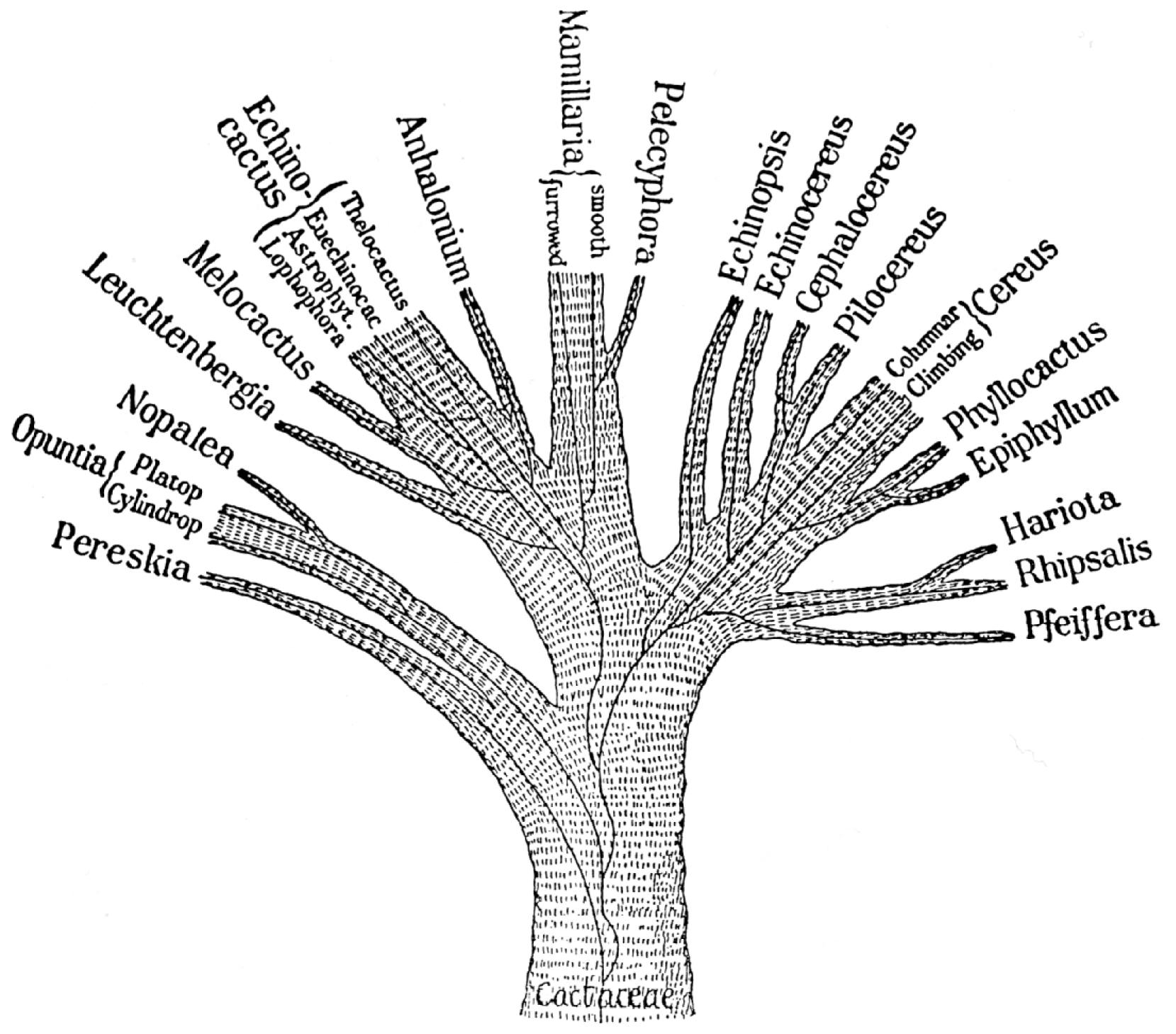
Parallel and vectorized phylogenetic tree inference for massive taxonomic datasets.
VeryFastTree is a new tool designed for efficient phylogenetic tree inference, specifically tailored to handle massive taxonomic datasets. It is a highly-tuned implementation based on the FastTree-2 tool that takes advantage of parallelization and vectorization strategies to speed up the inference of phylogenies for huge alignments. For example, VeryFastTree (v4.0 - July 2023) can construct a tree on one server (two 32-core Intel Xeon Ice Lake 8352Y processors) using single-precision arithmetic from an ultra-large one-million taxa alignment in just 36 hours. In contrast, VeryFastTree-3.0 and FastTree-2 require over 5 days for the same task. That means VeryFastTree-4.0 is over 3x faster than its previous version and FastTree-2.
VeryFastTree is available as a package in: Bioconda, MacPorts, and Debian Linux distributions. It also provides Python bindings.

Process FASTA and FASTQ files at scale, on a single server or a cluster, with an interface compatible with SeqKit.
BigSeqKit is a parallel toolkit to manipulate FASTA/Q files at scale with speed and scalability at its core. BigSeqKit takes advantage of an HPC-Big Data framework (IgnisHPC) to parallelize and optimize the commands included in seqkit. In this way, in most cases, it is from tens to hundreds of times faster than other state-of-the-art tools such as seqkit, samtools, and pyfastx. At the same time, our tool is easy to use and install on any kind of hardware platform (single server or cluster). Routines in BigSeqKit can be used as a bioinformatics library or from the command line. In order to improve usability and facilitate the adoption of BigSeqKit, it implements the same command interface as seqkit.

Bring HPC and Big Data workloads together in a multi-language computing framework built on MPI.
IgnisHPC is a framework whose main objective is to unify the execution of Big Data and HPC workloads in the same computing engine. IgnisHPC has native support for multi-language applications using JVM and non-JVM-based languages. Currently, it supports C, C++, Python, Go, and Java. Since MPI was used as its backbone technology, IgnisHPC allows MPI applications and libraries to be directly executed efficiently within the framework. The experimental evaluation demonstrates the benefits of our proposal in terms of performance and productivity over other frameworks such as Spark. For example, on a 12-node cluster with 2 × Intel Xeon E5-2630v4 (2.2Ghz, 10 cores) per node, the experimental results show:
| Application | No. times faster than Spark |
|---|---|
| Minebench | 3.87x [Python & C++], 1.26x [Python] |
| TeraSort | 1.76x [C++], 1.35x [Python] |
| K-Means | 1.94x [Python & C++] |
| PageRank | 1.10x [Python] |
| Transitive Closure | 1.12x [Python] |

Apply perplexity-based filters to text documents and remove noisy content, with bulk and distributed processing capabilities.
This package provides a simple interface to apply Perplexity filters to any text document. A possible use case for this technology could be the removal of boilerplate (sentences with a high perplexity score): ads, incomplete or noisy text, and remnants of the navigation structure, such as menus or navigation bars. Furthermore, it provides a rough HTML tag cleaner and a WARC and HTML bulk processor, with distributed capabilities.

Scale multiple sequence alignment using Apache Spark, with fault tolerance for large datasets.
PASTASpark is a tool that uses the Big Data engine Apache Spark to boost the performance of the alignment phase of PASTA (Practical Alignments using SATé and TrAnsitivity). PASTASpark guarantees scalability and fault tolerance, allowing users to obtain Multiple Sequence Alignments (MSAs) from very large datasets in reasonable time.
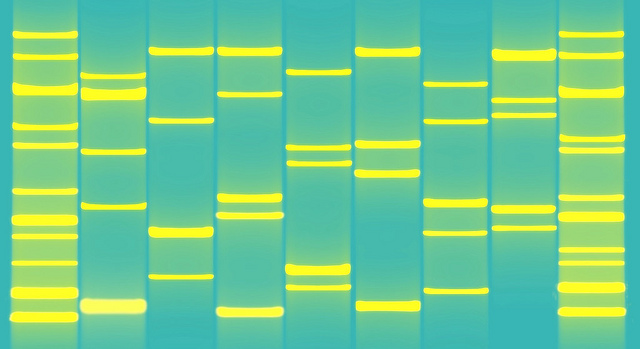
Accelerate DNA sequence alignment by combining Apache Spark with the Burrows-Wheeler Aligner.
SparkBWA is a new tool that exploits the capabilities of Big Data technology like Apache Spark to boost the performance of one of the most widely adopted DNA sequence aligners, the Burrows-Wheeler Aligner (BWA).
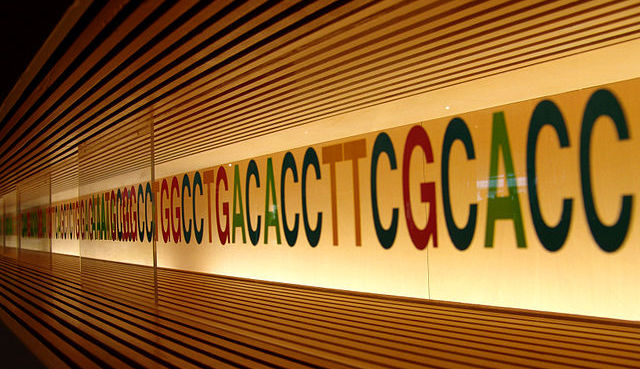
Run the Burrows-Wheeler Aligner on Hadoop clusters for high-throughput DNA sequencing.
BigBWA allows executing the Burrows-Wheeler Aligner (BWA) on an Apache Hadoop cluster, bringing the power of Big Data technologies to high-throughput DNA sequencing.
03 / Publications
The complete bibliography, including journal articles, conference papers, preprints, and book chapters.
88 publications and preprints
No publications match these filters. Try another term or clear the filters.
04 / Projects
A selection of research projects I have been involved in, with funding information and project periods.
Funded by Proyectos de Generación de Conocimiento 2025, Ministerio de Ciencia e Innovación - Agencia Estatal de Investigación (PID2025-167749OB-C21)
X-MED aims to advance trustworthy, transparent, and evidence-based access to digital health information by integrating methods from Natural Language Processing, Information Retrieval, Clinical Informatics, and Computational Psychology. The project addresses a central societal challenge: citizens…
Funded by The European High Performance Computing Joint Undertaking (EuroHPC JU), European Union PROYECTOS DE COLABORACIÓN INTERNACIONAL - CONVOCATORIA 2025-1, Ministerio de Ciencia e Innovación - Agencia Estatal de Investigación (PCI2025-163229)
QEX is the first European Quantum Excellence Centre (QEX) in Europe, funded by the European High Performance Computing Joint Undertaking (EuroHPC JU), with Spain participating through the Galicia Supercomputing Centre (CESGA), CiTIUS, IGFAE, and CITIC (UDC). This centre, driven by a consortium of…
High-Efficiency High-Power Laser Beaming In-Space Systems Based On Sic
Funded by HORIZON-EIC-2023-PATHFINDERCHALLENGES-01, European Union (101160868)
Wireless power transfer has the potential to revolutionise energy systems, but current technology faces limitations. Laser power converters (LPCs), which use light to transmit energy, struggle with efficiency losses at high intensities. These losses occur because the materials used in LPCs cannot…
Content curation for consumer health search - Search and misinformation detection
Funded by Proyectos de I+D, Ministerio de Economía y Competitividad (PID2022-137061OB-C22)
One of the most time-critical challenges in the area of Information Access is to combat the spread of misinformation. Existing approaches for misinformation detection use elements such as neural network models, statistical methods, linguistic traits, or fact-checking strategies. However, the menace…
05 / About
I am a full professor at the Universidade de Santiago de Compostela and a researcher at CiTIUS. My work focuses on parallel, distributed and quantum computing, programming models, and software optimization, with applications in computational biology and information retrieval.
I received my B.Sc. in Physics and my Ph.D. in Computer Science (2006) from the Universidade de Santiago de Compostela.
My previous experience includes research and project management at the Galicia Supercomputing Center (CESGA), and visiting postdoctoral stays at Universidad Carlos III de Madrid and the University of Illinois at Urbana-Champaign.
06 / Contact
For research enquiries and potential collaborations, you can reach me by email.